Showing posts with label family. Show all posts

Sunday, April 13, 2014

What's in a name?


Not my great great great great grandfather

I don’t know where the name Gutteridge came from. Wherever it was, I wish it had stayed there. 

Gutters, Guts – it was so easy to burden me with schoolboy nicknames. I feared the sniggers of classmates when the teacher called out my name for the first time. Even now, when asked to spell it for the benefit of Indian call centres, I say the first five letters slowly, g-u-t-t-e… then a quick “ridge, as in the top of a hill”. I mean, why use the awful “gutter” word if I don’t have to? 

I used to cling to the hope of gentrification offered by those ridiculous “know your name” companies. 

“The name Gutteridge has a long Anglo-Saxon heritage,” they’d say. “From the region of Goodrich in the county of Hereford. Gód means good and Rica means powerful.” 

So I was descended from a king. Then the company would try to sell me the family crest. 

All nonsense, of course. There’s no more nobility in the Gutteridge name than the word Smith, Baker or Hann. You are what you make of yourself, I always thought. 

So the recently published research into surnames and social mobility by Scottish-born economist Gregory Clark (out of an American university, predictably), raised several eyebrows. According to Clark, there’s no more social mobility in the world now than there was when the Gutteridges were good and powerful ones. 

A person’s surname carries information about their social status, which generations can do precious little to change, and the narrowing of the gap between the posh and the poor (I paraphrase here rather shamelessly) has scarcely narrowed in centuries. Despite what we’d like to believe about the effects of the industrial revolution and the efforts of politicians to create a more even society, the principal influence in our social status is our great- and great-great grandparents’ names. 

In other words, try as I might, I can never take the gutter out of the Gutteridge. Well that’s what Professor Clark reckons, anyway. Clark comes from the Latin clericus, meaning scholar. So his life was pretty preordained too. 

The popularity of the television programme Who Do You Think You Are, the obsession with Ancestry.com and other genealogical resources, indicates a general fascination with our origins. 

This is nothing new. My father used to tell anyone who would listen that his four-times-great grandfather was an admiral of the fleet who rejoiced in the name Sir Cloudesley Shovell. This is the man who, in 1707, became famous for failing to navigate the British fleet round the rocks off the Isles of Scilly, thereby occasioning one of the worst naval disasters in our country’s history. 

His ship was called HMS Association, and according to Dad, it probably contained the family fortune. Dad was so convinced of this association with the Association, that he named his first-born (my half-brother) Cloudesley, who named his dog Cloudesley, and eventually his own son, my nephew. Try listening to that name with a straight face in school assembly. Fortunately the boy went to Eton, which is full of silly names. 

Once I met a man who had dived down to the Association wreck and retrieved some sovereigns. He was called Rex (seriously). I presented my half-brother with one for Christmas and he got all misty-eyed. 

“All that's left of the family jewels,” I heard him mutter sadly. 

Unfortunately, a few years later I got rather hooked by the genealogy bug myself and signed up to the GenesReunited website. You start your own family tree and immediately the computer matches it with others from around the world. I quickly struck the jackpot. 

A distant relative had been compiling his own tree for 30 years and had thousands of entries going back generations. But no Cloudesley Shovell. I emailed him to ask why. 

“Oh, that old chestnut,” he wrote back. “Your very-great uncle William first thought there was a connection when he went to Somerset House to investigate his own tree. He must have misread the entry, for his ancestor was actually a cabin boy on the Association, not the admiral.” End of association. 

Mind you, I’m rather relieved. Imagine the nicknames you’d get with the name Shovell.

Monday, January 13, 2014

Should we move Christmas?


Last Tuesday I celebrated Christmas with my family. 

A fortnight late, I know, though not according to my Serbian builder. Zoric (his real name is Velibor, but everyone calls him by his surname) observed his Christmas on Tuesday as well. In Serbia they use the Julian calendar, so his celebrations are always two weeks late, a bit like his building work. 

While Zoric was supposed to be chopping down an oak branch and spreading straw on the floor of his house (a Serbian tradition I doubt he transposes to his flat in Tottenham) I was a few miles away in the Groucho Club, surrounded by children, presents and bemused celebrities.

Monday, July 1, 2013

Proud mums and pushy parents

 
This afternoon a 19-year-old girl will take hold of Britain’s nerves and torment them for a couple of hours until she either makes history or goes back into the big box of British sport’s near-achievers. 

Laura Robson, this season’s tennis darling, has already managed to demonstrate both aspects of British sporting prowess – flashes of brilliance interspersed with nervous unreliability.

Sunday, August 12, 2012

A Bit Of A Week


It’s been a bit of a week. Starting with the bull incident.

With expectations of a few blissful days in rural Northumberland, last Saturday the first of several waves of friends arrived from London. We’d promised them gentle strolls through our fields, barbecues with fresh salad straight from the garden, and long snoozes on comfy sofas. The bull had other ideas.

Sunday, August 5, 2012

The Crying Games

“Don’t forget to call me in for the bit where they cry at the national anthem,” I called out from the kitchen where I’d been constructing a mountain of spaghetti bolognese for ten hungry mouths.

Their appetites are insatiable, not just for the food, but also for large doses of the Olympics drug that for days has cemented the family onto the giant L-shaped couch in the TV room. Even the cook mustn’t miss the moment where we all blub along with the athletes during the medals ceremony.

Monday, July 23, 2012

Daddy - the sky is blue!


Did everyone enjoy the summer then?

The sun, whose extended visit on Saturday only served to remind us of what we’ve been missing these long wet months, immediately prompted barbecues and shorts to be dusted off across our region. Desperate to get out into the vegetable garden, I couldn’t find any sandals beneath the pile of muddy wellingtons, so I wore socks and trainers with my bright green shorts.

Jo was horrified. She wouldn’t let me even take the rubbish out in case the neighbours saw – she said I looked like a German tourist. Izzy had greeted the day by shrieking with excitement: “Daddy, the sky is blue”. She dragged me into the garden for a closer look.

Sunday, June 3, 2012

The Diamond Jubilee

Last night after dinner Mum stood up and gazed skywards as if admiring an unseen deity. Then suddenly, with a speed belying her 91 years, she spun round and flapped her arms like a deranged pigeon.

“The Raven?”, “The Birds?”, we offered, unable to suppress our laughter.

“No, no” she shouted out loud, frustrated by our incompetence.

“Ssh”, everyone went, “do it again, Granny”.

Once more she looked up and bowed, then resumed her flapping even more wildly. A goose, maybe? Or a very cross swan?

“The Black Swan – that’s three words, not one”.

Playing charades with Granny is like going back to those happy evenings without X Factor and X Box, texts or apps. It’s how life must have been in the innocent days of the Fifties when Elizabeth became Queen. And when I was born.

There are ten of us in this holiday apartment on the West Coast of Scotland. We’re here for Jubilee week – not because we didn’t want to join our English compatriots for their loyal celebrations, but in truth because we hadn’t realised our family party would be clashing with The Queen’s when we booked.

As we drove through Northumberland, people were still draping union jack bunting over fences and telegraph poles. At the border, opposite the enormous blue and white flag of Scotland, a modest union jack implored us to stay in England, but it hadn’t quite made it to the top of the flagpole, which gave it a rather mournful air. Reflecting the impending loss of its blue background, no doubt.

All the bunting in the Scottish villages was plain blue and white, or faded and multicoloured, left over from a thousand village fetes. It looks like Scotland left the United Kingdom a while ago. The BBC isn’t even bothering to put up one of their big public screens in Glasgow: to most people here, the Jubilee, like the Olympics, must be an irrelevant London-centric curiosity.

Despite the lack of royal branding, there’s nowhere that appears more stuck in a Fifties time warp than this part of Her Majesty’s realm. At the local Asda I asked for an aubergine and they thought I was mad: “We don’t sell that kind of thing here”. But they had a good selection of sliced white bread and iced finger doughnuts. I’m glad we brought our own supply of Marks and Spencer’s jubilee cakes. One way or another, I’m determined to celebrate this Jubilee: for I completely missed the last two.

Ten years ago I was the only Brit on an American film set in Mexico, so the Golden one came and went without me. Back in 1977, I was actually directing the BBC’s live Silver Jubilee coverage at Television Centre. On the warmest day of the year we’d filled an enormous studio with a traditional English summer fair, brimful with British clichés. Children wrote special Jubilee songs, everyone wore red white and blue, and we had outside broadcasts from street parties across the land – even from Scotland. Meanwhile the Queen waved cheerily from her coach through the streets of London.

Despite the enormity of the occasion, like all television producers I felt rather disconnected from the real world, and, by the time it was over and I’d stepped into the warm evening air, they were already sweeping up the union jack napkins and empty champagne bottles from the gutters.

So this time, we’re doing it properly, and I’ve brought a red, white and blue shirt and a fake diamond tiara for Izzy. We’ll toast Her Majesty with pink champagne and after the Jubilee cake we’ll probably play another drunken round of charades; Mum will fail to decipher my impression of The Royle Family.

“Give up?” said Mum finally, exhausted with all the flapping.

“Yes”, we groaned, exhausted by all the laughing.

“It’s Superman, of course”.

“What?”

“It’s obvious – he’s super, and he flies”.

Simultaneously eight of us put out an arm in front of us, impersonating the real superhero.

“Nonsense – no-one could fly like that,” Granny protested.

“But he’s Superman,” we said.

I hope The Queen is better at charades than my Mum.

Sunday, February 14, 2010

How To Speak Cough

As I pulled up to the lights on my way to the train station, I noticed that the car in front of me was a Toyota. I wondered what it must be like to own a car that’s waiting for a safety recall. I imagined the driver nervously checking his accelerator pedal, trying to remember what the smiling lady in the Toyota video told him about slipping the gearstick into Neutral when his car goes hopelessly out of control (“That’s N for Neutral”, she purrs reassuringly).

All things considered, the Toyota driver seemed pretty relaxed as I pulled alongside. To think that just a month ago I’d nearly bought a Prius. As the lights changed I glided away in my new Mercedes. The feeling of superiority was short-lived. The car, scarcely out of its wrapping paper, was slowing down. I floored the non-stick accelerator pedal and the wretched machine promptly froze, right in the middle of a busy junction. It was rush hour, and on Radio Newcastle they were asking listeners to phone in traffic problems. As a chorus of irritated horns signaled the buildup of a pretty big one, I instead phoned the Mercedes recovery service, then the important client who was expecting me in London.

The first police patrol was very polite. They advised me to get out and stand at the side of the road. Apparently it was safer. It was certainly colder. My feet welded themselves to the icy pavement as I waited and watched the traffic get more irate. Then another police car pulled up. Apparently my tailback was stretching back to the A1. To any readers of this blog held up in Newcastle on Wednesday morning, I apologise. Then some more police on their way to unarmed combat training arrived; despite wearing shorts and trainers, they wrenched my car into neutral and manhandled it to the side.

The man from Mercedes took thirty seconds to analyse the problem. “You’ve run out of diesel”, he said. Which was nonsense: the fuel gauge showed one quarter full and the onboard computer said I had 120 miles left. It’s a problem with the coding, he said. Apparently the car, a C220 CDI, has two fuel tanks, and a computer pumps one into the other when it gets down to a certain level. Except mine didn’t, because of the coding. He said it was the third one this week. Sounds like another recall. That’s what the Mercedes service man said as I waited to have the thing repaired. A fault at the factory, it was. So will this affect all models? You’re not the first, is all he said. The coding cost me £250 in wasted train tickets.

Thank goodness humans don’t have recalls. Baby Izzy is already a one-year-old. I marvel at how everything works so perfectly as she grows into a little person. Mind you, yesterday I felt that irrational parental panic when Jo told me that a friend’s baby, who’s a week younger, is already walking and talking.

Izzy is still crawling and speaks Cough, a new language we invented together. She coughs; I cough back. She comes closer and coughs twice; I cough twice too. Then she brings her face right up to mine, till our noses almost touch. She takes in an enormous breath, turns bright red, then chokes out a loud, spluttery cough right into my eyes, before falling back in a fit of giggles. It’s our private game, and it’s better than any language I know.

Jo, quite rightly, wants her to unlearn it as soon as possible. Apparently it’s embarrassing in playgroup: maybe the other mothers think she has swine flu. But I want to enjoy every cough-game before she starts talking properly; before her perfectly written code begins to pump out the next phase of that miraculous, faultless transition from baby to child.

Sunday, September 27, 2009

Indian Summer

It could so easily have been a disaster. Thankfully Saturday night turned into an evening of delicious surprises.

I’m not referring to Kevin Nolan’s hattrick in Newcastle United’s 4-0 trouncing of Ipswich, or the removal of Richard Dunwoody from Strictly Come Dancing, pleasant as both incidents were in themselves. It was the fact that our party actually worked.

It certainly might have been a different story. Three months ago, on a particularly warm late spring day, Jo and I decided that as we were getting married in California, we should throw a little shindig for our closest friends and family back home in England. Dreaming of chilled pink champagne and strawberries in the garden, I unilaterally decided to write “4.30pm start” on the invitations.

As the months passed and we discovered that the Meteorological Office’s promised “barbecue summer” was just a fantasy, Jo berated my absurd optimism. What on earth were we to do with 70 people in a chilly windswept Northumbrian farmhouse in the pouring rain in late September? As usual, I stubbornly refused to accept she might be right.

Last week, as the BBC weatherman was still insisting it was sunny and warm, we were lighting the Aga and bringing in the winter logs. I buttoned up my jacket against the cold drizzle and defiantly trudged round the local wine shops. Apparently there isn’t much demand for pink bubbly right now. Eventually a nice man at Ponteland Wine Rack managed to track some down in Sheffield. Just in case, we’d booked heaters and a marquee. Then, to really warm people up, we ordered curry.

It wasn’t just that we wanted fine weather for our party, it was that we’d invited so many friends from London who were utterly convinced we’d moved to the North Pole. This was their first sight of our new home and for some it was their first taste of our region. As self-appointed North East ambassadors to our unfortunate city cousins, we wanted the whole county to make a good impression.

We needn’t have worried. On Saturday morning we woke up to blue skies and warm air. Somebody was smiling on us – and on Northumberland. The September roses were at their peak in the garden, the sheep were bleating in a major key, and the guests arrived with smiles, gifts, and a determination to party.

Theatre directors, television producers and showbiz agents mingled with farmers, doctors and landowners. It was the most eclectic mix. But the highlight of the night was the curry. Our dear friends at Rasa really pulled out the stops and threw us a full-scale Keralan wedding banquet, complete with music and dancing. Even Jonathan Shalit, agent to stars like Myleene Klass, Jamelia and Kate Silverton, and hitherto a terminal curry-hater, was won over.

Jonathan’s been a good friend since the day we stood side by side in the urinals of The Ivy and he offered me a television exclusive with his new signing, a 12 year old Welsh opera singer that he thought was going to be huge. I politely declined the opportunity and the fact that I’d turned down Charlotte Church is a story he retells with great relish at every party he comes to.

Jonathan had rung me on Monday to say that he simply couldn’t bear curry, so we prepared him a separate meal. But in the middle of the banquet, surrounded by the wonderful smells and sounds of Kerala, he couldn’t resist. The conversion was instant. Everyone in the room pronounced it the finest curry they had ever tasted, and were shocked to discover that it had been cooked by an Indian restaurant in Newcastle. The Londoners were even more shocked to find out that they could get precisely the same cuisine in several Rasa branches in London.

It was one of many surprises that night. David Cottrell, my old schoolfriend and one of the country’s top eye surgeons, discovered that the Indian dancer performing astoundingly exotic and sensual moves right in front of him actually worked in his ophthalmology department at the RVI.


As I write this on Sunday, the weather is back to its gloomy chill and the garden is a forest of empty bottles. Ah well, back to reality.

Sunday, September 13, 2009

Mr & Mrs


Jo tugged at my arm excitedly. “Look!” she whispered.


I’d spotted the woman as we emerged from the hotel reception. A dark-haired, sullen, pouty, predatory type dressed in dark brown and standing with her back to the grey-haired man loading luggage into the boot of a small saloon car. I hadn’t given the couple a second glance.

“It’s Mel Gibson”, she hissed. I looked back. He was much shorter than I’d expected, but the face was unmistakable. There was Braveheart, slamming down the boot lid as his new Russian girlfriend Oksana Grigorieva slinked into the passenger seat.


I can understand why celebrities like the Post Ranch Inn, a modest title for one of the most exclusive hideaways in California. Set high on the clifftops of Big Sur, sixty miles of scary hairpin bends away from any sort of town, the hotel is a collection of secluded chalets carved into the hillside. From the outside they look like little hobbit homes with grass roofs; inside, walls of glass display an expanse of Pacific Ocean a thousand feet below. Without television, internet, mobile phones or children, it’s more rustic than luxurious. New age music plays from the stereo – pan pipes and piano evoking opulence and exotic spa treatments. Perfect for a honeymoon, it’s evidently also a celebrity love nest.

“I know, let’s ask him if he wants to do a reality series,” Jo said suddenly as we walked up the hill towards our infinity pool jacuzzi. “He needs rehabilitating after his anti-semitic outburst in Malibu – tell him I’m a Jewish television producer.” I think she was only half joking.

Both Jo’s parents are Jewish, and our wedding had been held in the garden of their home. This was nothing like my previous experiences: the Tibetan Buddhist ceremony set in the Himalayas, or the Church of England affair, complete with bishop. Our ceremony was performed by Cantor Yonah Kliger of the Emanuel Temple in Beverly Hills, synagogue to the stars. A delightful man, who has been Jo’s close friend for nearly twenty years, Yonah also has the most beautiful singing voice, which is why people like Steven Spielberg book him for their children’s bar-mitvahs.

I liked the way the cantor does all the singing – no communal grunting through unfamiliar hymns, the hundred or so guests simply enjoying the sea view and the romance as Jo and I plighted our troth under the chuppah – symbol of our home – with my two sons as best man and “ringbearer”.
It was a moving, intimate wedding and, as it will undoubtedly be my last, I was determined to enjoy every moment. I loved the unfamiliar rituals: Jo circling me seven times, the stamping on the glass, baby Izzy waving at the crowd with a tiny yamacha perched on her head, and the laughter and tears as Jo and I read out the vows we’d written ourselves.


Jo looked so breathtakingly beautiful I think in the heat of the moment I even vowed to obey her – but as I’ve been doing that for the past six years I guess it won’t make too much of a difference back home.

After all that excitement, the honeymoon hotel was a moment of tranquility on the way to the Napa Valley for some wine tasting and fine dining with my divorce lawyer Gary and his wife. Although the legal fees in my last protacted settlement can’t have come close to Mel Gibson’s £640 million divorce from the mother of his seven children, Gary and I became very good friends during our three-year battle.


At The French Laundry, said by some to be America’s finest restaurant, somewhere around the eighth course I toasted Gary and formally discharged him from service.

“I no longer need a divorce lawyer — you’re fired.” “L’chaim!”, he said, raising his glass: “To Life!”.

[Please click on "Follow" to receive notifications of subsequent posts on this blog. And feel free to Comment - it's good to know someone's reading it!]

Monday, September 7, 2009

Drama In Dana Point


It’s been an emotional couple of weeks.

Weddings are supposed to be stressful affairs, but Jo and I have been fortunate. Instead of the customary panic with caterers and table plans, we’ve quietly enjoyed our Northumbrian summer while the real pressure lay with our generous hosts, my future (now present) in-laws. They’re a delightful, warm couple living in an opulent gated community overlooking the sea in Southern California.

Nothing much happens in Dana Point. The local paper, the Orange County Register, must have the most bored crime reporter in America. “Thousands attend food and fun fest”, declared its front page the day we arrived, referring not to our forthcoming wedding, but to the Orange International Street Fair. On the inside pages, a short paragraph about an unidentified homeless man found dead in nearby marshes (“Police do not believe the death to be suspicious”) was eclipsed by reports of charity fund-raising events. The community is a million miles away from the fires belching black smoke into the atmosphere on the other side of Los Angeles. Here the air is cooler, the sky always blue.

The Pines scarcely blinked when the Gutteridges descended on them: baby Izzy, my boisterous children, and their 88-year-old grandmother. We’re not exactly the quietest of families, but they welcomed us with open arms.

However I think the stress of the occasion finally got to my father-in-law the first night we all got together. He’d commandeered a local Italian restaurant and, inspired by several glasses of Merlot, stood up and made a moving speech welcoming the union of our two large families. Like a scene from The Godfather, his tears flowed with the red wine as he sat down to appreciative applause.

Unfortunately the occasion must have been a little too much for him. His eyes closed and we all watched transfixed as, in agonisingly slow motion, his head lowered itself onto my mother’s chest. She scarcely blinked, but, with calm English aplomb, gently turned to the side, thereby allowing the head to continue its journey downwards into a plate of warm spaghetti. It was a momentous sight.

Jo, of course, was mortified, and immediately ordered me to carry her father to the car and drive him home. It was there that the drama really started. Declaring himself perfectly fit, he stood up, whereupon his legs crumpled, he fell forward and demolished a valuable antique coffee table, then lay moaning on the floor.

Not sure whether her father was injured or dying, Jo dialed 911 and within minutes the sleeping neighbourhood was woken to the sound of fire engines and ambulances. I counted 11 paramedics in the room as they thoroughly checked their patient, then pronounced a good night’s sleep as the best cure for what they politely diagnosed as an allergic reaction to the wine.

The following morning Billy was utterly remorseful. He needn't have been. Generous and open to a fault, we love Billy and I'm proud to have him as a father-in-law, even with his head in the spaghetti. He and his lovely wife Lisa gave us the wedding of our dreams, for which we're truly grateful. More of which later. Whether Dana Point has recovered from either event yet is another matter.

All the excitement must have rubbed off on the rest of the town, for the following morning my son and I were calmly collecting our suits from the dry cleaners when we heard gunshots, the screeching of tyres, and more than a dozen police cars surrounded the motel across the street. Within a few minutes we were in the middle of a scene from CSI. A police helicopter circled overhead, a fat detective with a loud Hawaiian shirt barked orders at officers with fearsome-looking rifles. The Orange County Register reported next day that a man, upset over a breakup with his girlfriend, had opened fire at nothing in particular from his motel room. Now that kind of thing doesn’t happen too often in Morpeth.

After that, the wedding itself was comparatively calm: a warm, loving family occasion with the sun setting on the sea behind us, and a honeymoon shared with my divorce lawyer and Mel Gibson - really (see the next post).

Sunday, February 8, 2009

How Not to Drive Down a Hill


I have no sympathy for those thousands of motorists caught in snowstorms over the last week. I mean, why on earth does anyone go for a drive in a blizzard, playing chicken with the emergency services? – they deserve a good dose of hypothermia. It’s no use blaming the councils for running out of grit, people should be at home watching Newsnight rather than selfishly obliging nice innocent villagers to unlock their community halls and heat up bowls of soup in the middle of the night.

There’s something about bad weather that brings out the worst in men. Yes, men, for I doubt many women would be stupid enough to venture out in conditions like these. But no, a man has to get out his 4x4 and show it off.

On Monday night, just as a white blanket was descending over our valley, I decided to visit my Mother. “Don’t come,” she warned, “you’ll never get down the hill”. “Don’t be absurd, Mum”, I laughed, “the Volvo has four wheel drive.” “You’ll still never get down the hill,” she droned. “I’ll be fine; I’ve got a special button called Hill Descent Control. You just press it and take your foot off the brake.” “Off the brake? You’re mad; you’ll end up in the river.” “Mum, the engine torque holds back the weight of the car”, I added, without the slightest clue of what I was saying.

The white road snaked into the darkness below. My Hill Descent Control button has a picture of a car confidently gliding down the side of an alpine peak. I pressed it and led the shiny new Volvo into the abyss. 10 jerky seconds later, I realised that this had all been a huge mistake. It must be a sensation felt across the nation this week, especially by those morons in Devon who thought they could make it safely up the A38 before the snow was up to their windscreens. It’s been a great week for bodyshop repair companies. Halfway down the hill, I knew there was no way my two ton monster would make the turn into Mum’s drive; the powdery white surface was the frosting on a cake of pure ice.

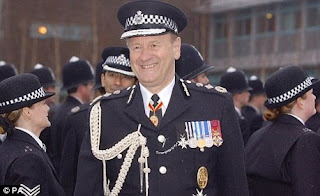
Mum was wrong about one thing, though: I didn’t end up in the river. This was thanks only to a huge gatepost connected to an even larger gate, along with about twenty feet of perfectly good fencing. All of which belonged to the former Metropolitan Police Commissioner, Lord Stevens, and which currently lie in pieces somewhere near his front porch. He was terribly nice about it. Lady Stevens took photographs as Britain’s most distinguished policeman and I tried to tug a ten-foot fence plank out of my chassis; it had somehow managed to drive itself into the fog light and out of the other side of the car, so the Volvo re
sembled a gazelle impaled by an Assegai spear.

He’s a decent bloke that John Stevens. Apart from blaming his road for being too icy,
and his gate for being shut, neither of which were any justification for an event caused by my customary stubbornness and refusal to listen to my mother’s good advice, it was obvious there was no way my all-weather XC70 was going to get out of his front drive until the thaws came, so he gave me a lift home, and on the way demonstrated how a real expert drives on ice. I felt about 12 years old.

The last time I destroyed a fence was 30 years ago, on the M4. That time I was rescued by Selina Scott. To be precise, I escaped arrest by promising the boys of the Thames Valley police a signed photograph of their favourite newsreader. It’s a shameful story, which I couldn’t possibly repeat here. But if you really want the full confessional, see my next post.

Sunday, November 9, 2008

The Horror of the Somme


Clearing out some cardboard boxes in the garage yesterday, I unearthed my Dad’s old school cap. Tucked inside was a little blue book, dated June 1920. “The Elysian War Roll” was a list of all the pupils from Dad’s school who had fought in the war, which had ended just 19 months before.

618 names, from Alabone to Young; 10 Military Crosses, 23 Mentioned in Dispatches; 89 Fallen in the Service of their Country. There on page 25 I read “H.T. Gutteridge, Rifleman, 16th London Regiment (Queen’s Westminster Rifles). 1916, France. Invalided Out.”

Dad never mentioned the war – the First World War, that is. He always had plenty to say about the Second; and his distrust of all things German, Italian and Japanese. But he refused to speak of the time in 1916 when, at the age of 20, he found himself shipped out to the Somme. That appalling, unnecessary battle, which resulted in more than a million deaths, was arguably the most shameful chapter in British military history. It clearly had a devastating effect on my Dad.

Even in his fifties, in times of stress his stiff upper lip would crumble into a nervous twitch. When as a child I probed him about the war, he would go silent. He couldn’t be drawn on the horrors he experienced in those few months before they discharged him with what today would be called a nervous breakdown.

A sensitive, proud man, he must have been overwhelmed by the stench of filth, human excrement and death, and by the terrible scenes. Hundreds of dead strung out like flotsam on the shore; many others caught in the enemy wire. According to one witness, some looked like they were praying: “they had died on their knees and the wire had prevented their fall.”

How could he and the school friends who joined him in Kitchener’s Volunteer Army know what they were marching to, armed with just blind patriotism and a Lee Enfield rifle? One moment they were young, carefree boys from North London, the next they were surrounded by carnage. The Elysian War Roll lists their fate: P.T. Light must have been Dad’s classmate, killed in Leuze Wood (which the British soldiers nicknamed “Lousy Wood”) close to the village of Guillemont. I’ve found a photograph of Guillemont taken that same November: nothing but acres of mud and charred tree stumps.

Those back home had only a vague understanding of the conditions. My Mum knew a family called Upton whose father described how when he came home from leave, his own mother wouldn’t allow him into the house until he had stripped out of his uniform on the doorstep. Then she took a lighted candle and ran it up the seams of his uniform to burn out the thousands of lice.

Perhaps those who survived the trenches felt they shouldn’t tarnish their loved ones with the terrible blackness of their experiences, but Mum tells me that Dad wasn’t alone in not wanting to share his pain. In the 60’s and 70’s my Mum travelled the country teaching craft skills to disabled war veterans. She told me of one brave man, awarded the Military Medal, who every night woke up screaming and yet couldn’t discuss his nightmares with his wife. So Mum gave the old soldier a box of paints and suggested he tried to paint his own terror.

When Mum returned some weeks later, the man’s wife greeted her with smiles. At last, the nightmares were over, she said. Then Mum saw the painting: he had only used black and brown. The heavy strokes depicted the dark stumps of burnt trees, and to the far horizon, a sea of mud. It was a masterpiece.

90 years ago may seem like ancient history, but it is still only one lifetime. Some survivors couldn’t describe their horror – but we must never forget it.

Sunday, August 17, 2008

Going for Gold

I nearly choked on my Weetabix. Having spent last week on holiday in Italy, the Olympics had pretty much passed me by. With Britain languishing below Ukraine in the medals tables, and Italian television not exactly concentrating on rowing or sailing, I’d assumed most of the British teams had got stuck at Terminal 5 and never made it to Beijing. Then, calmly having breakfast at home on Saturday morning, I heard the BBC commentator shout out, “The British are coming! The British are coming!” and watched our rowers draw level with the Australians. “Wherever you are, shout and scream at the television,” he ranted, “We can do it”. In London’s Earl’s Court, thousands of Aussies were hurling cans of Fosters at the screen. By the time our lads had crossed the line, I was dancing round the kitchen. The dogs started howling, convinced the Italian sun had gone to my head.

British victories happen so rarely, we can be forgiven a moment of euphoria. The BBC said that we hadn’t won as many medals in a single day for the last hundred years. That’s an even greater achievement than it sounds, because in the 1908 London Games virtually anyone who owned a pair of shorts could take part. In the Tug of War, Britain managed a clean sweep of gold, silver and bronze because we entered three separate police teams. The Americans, our only serious competitors, withdrew from the competition complaining that the Liverpool Police wore spikes on their boots for extra grip. The judges rejected the protest on the grounds that the boots were standard police issue.

It’s a shame the Tug of War has lost its Olympic status because it was up there with Polo and deer shooting as Britain’s best chance for glory. My grandfather was a tugger (I’m guessing that’s the word). I have a silver tankard at home commemorating his second prize in the 1890 Royal Tournament. He bequeathed his sporting ability to my Father who managed not only to play cricket for Surrey second XI, but was also a professional Football League referee. Indeed I have a newspaper photograph of Dad at Highbury in 1927 refereeing the first ever match in the world to be played with a white ball. He’s quoted in the Daily Mail saying he thought it would never catch on.

Poor Dad, I was such a disappointment to him. He tried hard to teach me how to hold a straight bat, but I’m afraid our sporting genes skipped a generation (my daughter played hockey for England). My Mum, who also came from a sporty family, complained there was no point washing my rugby kit – it came out of my rucksack in the evening as pristine as it had gone in. My parents knew that when I joined the school rowing team, it was just a motley group of rugby skivers (our boathouse down at Blaydon allowed us to get away from school for a whole afternoon). I remember the abject embarrassment on my parents’ faces when they came over to Cumbria to cheer us in the Talkin Tarn Regatta. Their exhortation “it’s not the winning but the taking part” must have taunted them as we coasted in half a mile behind the tailenders.

So, as Britain soared up to third in the medals table yesterday, I was rather hoping this national sporting resurgence wouldn’t just be a flash in the pan. Perhaps our success might rub off on the other teams I support? I’m writing this just as Newcastle United are running onto the pitch at Old Trafford for their first game of the new season. I’ve supported them all my life, and I’m still waiting for my first glimpse of silverware.

Tuesday, June 17, 2008

Happy Father's Day


I’ve been given the most amazing Father’s Day present. It looks like an unshelled peanut with a tiny beating heart. Our embryo has miraculously turned into an eight-week-old foetus. Through the wonder of ultrasound, we’ve just seen it for the first time, swimming inside a radar screen. Ozzy, or maybe Izzy (we won’t know the sex for a while), is already a living, beating, swimming peanut.

As I write this, Joanna is sitting on the sofa, surrounded by strange snacks and pregnancy magazines – for breakfast this morning she had black beans on a baked potato topped with sour cream and jalapenos. Meanwhile I’m planning our move to a larger house.

Having a baby means that in January my role as a parent will start all over again, days before my 57th birthday. Coincidentally, exactly 57 years ago, my Dad must have been sharing what I’m feeling right now. For I, too, was born to a father old enough to be my grandad.

The prospect of a new child at my age is both exciting and worrying. Exciting because I’ve completely forgotten what it was like to hold my own newborn, or change a nappy, or see the first toddling step. I’m looking forward to doing all the things I neglected last time. When my firstborn, now 26, entered my life, I was so preoccupied with career, so blinded by absurd ambition, I scarcely noticed the signposts whizzing past on his motorway to adulthood. These are mistakes I am determined not to make this time. I want to savour every delicious moment.

But I’m worried too. I know that people will assume I’m the granddad. I don’t mind personally, but I recall (now with painful shame) my fear of humiliation as a fourteen year old, praying that Dad wouldn’t come to parents’ day because his grey-haired, overweight 70-year-old presence might engender ridicule amongst my classmates. Oh, if only he were alive today, I would proudly show him off. He fought in the Battle of the Somme, refereed at St James’ Park in the ‘20s, was charming and gentle and doted on me and I wouldn’t even let him come to Assembly. Alas, my shallow, callow ignorance deprived him of many paternal pleasures.

I’ll understand if Ozzy/Izzy feels similarly about me, but I’m determined to be the coolest 70-year-old ever to go to parents’ day. Actually, that would probably be even more embarrassing for the poor child – there’s nothing worse than a parent who imagines he’s cool. But aside from this, I also fear for Ozzy/Izzy’s world.

In 1952 I was born into a society that had survived appalling war and deprivation. My parents’ generation was determined we should grow up with idealism and optimism. If human progress is measured by whether society has improved its quality of life, drawn its population closer to each other and to God, brought up its children balanced evenly on the pillars of family, health, marriage, career, community and spirituality, then my parents’ generation, and mine, have failed abysmally. In the ‘50s, people left their homes and cars unlocked; they smiled and helped each other; young people considered their elders their betters and only used knives to butter their bread; life was simpler, and the fabric of society more richly coloured than the bland consumerism of today. Sure, there have been improvements – we’re a little less discriminatory towards gender, class and race; we’ve learnt how to live longer; but as a whole 1952 was a nicer world to be born into than now.

It’s one of the reasons we have chosen to bring up our child in rural Northumberland. I wouldn’t say it’s like living in the ‘50s, but I do sense an appreciation of traditional values and lifestyle that’s lacking elsewhere in the UK. And that, for my new child, will be a priceless start to life.

Monday, June 2, 2008

Jim's Inn, Dad, and piccalilli

Last week's experience of working for a day in a professional gastropub kitchen brought back many childhood memories.

My father used to manage a restaurant in Newcastle called Jim’s Inn. It was a Steak Diane/Lobster Thermidor type of eaterie. You know the sort of place: black-tied waiters with faces marbled by alcohol, cocktail barmaid with heaving cleavage, tables lit by tiny candles, black walls and red leather, an air of forbidden opulence. For a 15-year-old, it was utterly addictive.

Dad had worked in the food industry all his life – he was a food technologist, working for companies like Heinz. He was on the team that developed Heinz Sandwich Spread and I still have his recipe for piccalilli at home, which might be really useful if ever I need to make 40 gallons of the stuff. Later he was a consultant for Tyne Brand in North Shields (strapline: “No lumps of fat or gristle guaranteed”) and for a company called Jaunty Foods that sold minced chicken resembling dog food.

Dad had the most sensitive palate, particularly for fine wine. So to be asked to manage a restaurant at the age of 70 must for him have been heaven. For me it meant that if I wanted to see him before bedtime I had to go into the dark recesses of the cocktail bar, and our Christmas lunch was always off the set menu. In its day, Jim’s Inn was the place to be. All the stars at the Theatre Royal piled in after the shows.

Mind you, there wasn’t much competition. I experienced the other end of the scale first-hand. Like the Park Hotel in Tynemouth where I worked as a waiter in the holidays. There was a terrifying chef who treated his staff even worse than the unfortunate pieces of meat he offered his customers. There was a Portuguese waiter who resembled Manuel from Fawlty Towers and one day, while serving a formal lunch to twenty of the region’s bank managers, he presented a huge tray of overcooked lamb chops to the guest of honour, and in the process poured two pints of scalding hot gravy onto his trouser crotch. The banker leapt into the air, sending the entire table, laden with liebfraumilch, skywards. The waiter burst into tears and ran out, never to be seen again.

I also remember working at the Everest restaurant in Tynemouth. I was asked to help out because on Christmas Day they’d optimistically sold two sittings for lunch. When I turned up, I was the only one with any waiting experience (and that was derived from my six weeks at the Park Hotel). Unfortunately the Everest's chef had quit the night before, so they hired a replacement from an agency. He turned up drunk at 10am and the turkeys were still in the freezer. The first hundred customers arrived at noon, and at 3pm they were still waiting for starters as the second lot were banging on the door. There was blood on the carpet that day. The owner, a charming but inept Indian gentleman, was in tears. North East food has come on a lot since those days.

Dad died in 1972, but those last flambé-filled years gifted me my fascination for catering. From time to time I scan the leases for sale, wondering if I should take the plunge, but I know that it would lead to ruin. I like food too much to serve anything but the best or to cut corners. It’s in the blood – my mother was a food industry expert as well. It’s one of the reasons I love being back in the North East: our ingredients and local supply chain are second to none. We could still do with some good restaurants, though.

25 years after his death, I was filming in Newcastle and made a pilgrimage to North Street to see what had become of Jim’s Inn. Amazingly, surrounded by new development, the little Victorian black and white building was still there, boarded up but otherwise untouched. There above the front door was the small plastic sign: “Herbert Thomas Gutteridge, Licensed to sell Beers, Wines & Spirits”. That night I borrowed a screwdriver from my hotel’s concierge and surreptitiously unscrewed it from the doorframe. I mounted it on a smart wooden plaque and my mother has it to this day.

That was ten years ago. The building still stands empty. Every time I pass it I smile and think of Dad, and how proud he’d be of my cooking in a real restaurant, even if for just one night. Forget television, the awards and the rest: food was what really mattered to him. Mind you, despite his amazing palate, he was really just a meat and two veg man. All my complicated sauces would have been pushed to the side of the plate. But he would have loved the Galloway beef.

Sunday, April 6, 2008

Age Shall Not Wither Them

Muka finally went blind last night. At 3am we heard the howling and found her butting the side of the open kitchen door. I put on all the lights, but still she couldn’t see her way out. She howled her fear until I stroked her brow and put my face next to hers. She laid her head on my neck and licked my ear, then, her big cow eyes unblinking, I gently led her step by step to the safety of her own bed.

Muka is a survivor. Joanna found her 13 years ago in a Los Angeles dog pound. She’d been rescued from the notorious South Central neighbourhood. Muka’s twin sister had already been put down, and it was her turn for execution that very afternoon. For months Jo nurtured her as the fur, destroyed by mange, slowly grew back on the enormous bat-like ears. Muka – quarter Staffordshire, quarter Lab, the rest anyone’s guess – has been at the centre of my life since Jo and I met. As her pack grew, she welcomed newcomers: Poncho the cat, and Truffle, our one-year old cocker. She is flatulent and seventeen and we all adore her.

Muka’s degeneration has been sudden. Last summer she was racing with Truffle across the fields behind the house. Now she trips over flowerpots as she shuffles her arthritic body round the garden.

We all have to accept the inevitability of old age, but it’s the speed of decay that I can’t get used to. My mother is 87. She’s independent, has her own house and car (she even recently got a speeding ticket), goes on international holidays and still teaches painting. Strong as an ox, she spent last weekend helping me plant my potatoes. Her mind is full of a lifetime’s experience and judgment.

Mum and I talked about the inevitable last week, sitting with a large gin and tonic, and Muka, big ears listening for the drop of crisps, at our feet. We weren’t being gloomy, just practical (she’s been showing me her funeral plot and where she keeps her Will every year since 1989). Her five brothers and sisters lasted into their nineties. She lost a brother last year, and her sister’s funeral was on Friday. Most of her friends have already gone. Mortality stares at us, and yet, to me, Mum hasn’t changed since she was sixty: opinionated, annoying, and utterly resilient. It’s her independence that impresses me most. An independence you see in so many of our elderly. And which, in a way, is their greatest threat.

For my generation tends to let our parents get on with things on their own. The disintegration of ‘family’, which began in the fifties, has now virtually stripped the word of any social meaning and left separate generations walled up in self-contained units, only opening their doors at Christmas and Easter.

Sure, society makes the odd gesture, probably to assuage communal guilt. Everyone over sixty got a free local bus pass this week (but no national train pass); there’s a winter fuel allowance, which against the rocketing cost of fuel is worth a fraction of what it used to be. Yet my mother, with a tiny state pension her only reward for a lifetime of national insurance and tax, instead of relaxing and enjoying her independence worries about every penny spent as if she were still in the days of rationing. How obscene that we, living under a supposedly Socialist government, charge our old people Council Tax. Especially as, thanks to the fragmentation of society that we have engineered, most of these old people now live alone.

It’s time Britain undertook a proper review of how we treat the aged. For when my own light begins to fade, I want to live my last days in a society which looks after its elderly at least as well as its dogs.